
Repositioning a Retail Brand for Direct-to-Consumer Growth
Repositioning a retail skincare brand for direct-to-consumer through trust, accessibility, and evidence-based design.
My Role
Sole designer responsible for the end-to-end brand and visual system, from initial retail launch through a full pivot to direct-to-consumer.
Scope
Brand identity, packaging, regulatory-compliant labeling, direct mail and magalogs, catalogues, digital advertising, landing pages, and web visuals — delivered as a unified system across print and digital.
Tools
Adobe Illustrator, Photoshop, and InDesign for identity and large-scale print systems.
Methods
Audience-specific design, accessibility-first typography, iterative A/B testing across channels, customer surveys, and performance-informed refinement.
TL;DR — Agein was built for retail shelves, but struggled after pivoting to direct-to-consumer. I redesigned the brand around accessibility, trust, and performance, achieving a 4–6% response rate (vs. a 1–2% industry average), 400% ROI, and expansion across Canada and the U.S.
This wasn’t a packaging refresh. It was a business transformation from a retail brand competing on the shelf to a direct-to-consumer brand competing for trust in the mailbox and online.
The Opportunity
The challenge was to build trust for an unfamiliar skincare brand targeting adults 60+, a group that is both highly discerning and saturated with health and beauty claims.
Agein’s original identity was designed for retail shelves, where dark, minimalist packaging conveyed a premium feel. When the business shifted to direct-to-consumer, that same approach struggled in catalogues, direct mail, and digital channels, where trust, readability, and clarity drive purchasing decisions. The redesign needed to overcome skepticism, improve accessibility for older adults, and create a consistent experience across every customer touchpoint.


BEFORE + AFTER: Agein evolved from shelf-first retail packaging to a trust-driven direct-to-consumer system. Brighter colours, softer forms, and improved readability tested stronger with seniors while creating a cohesive experience across packaging, mail, and digital.
Constraints and Scope
- Retail shelf visibility and legibility across multiple product categories
- Health Canada and FDA labeling requirements and UPC integration
- Scalability across multiple SKUs and formats
- Budget-conscious production decisions
- Tight timelines, with products launching in stages
- Consistency required across all future touchpoints
Research
and Discovery
I needed to understand how seniors actually engaged with skincare in a direct‑to‑consumer context. Research combined competitor reviews, customer surveys, and call-centre feedback. I also observed how older adults interacted with printed materials in person… how they held them, where their eyes landed first, and how often they struggled with small type or glare from glossy paper.
Across every source, three themes emerged: trust outweighed novelty, readability affected engagement, and familiar visual cues consistently outperformed cosmetic-industry trends.
Strategy
The strategy shifted Agein from a retail brand to a direct-response system built around trust, clarity, and accessibility. Rather than following cosmetic-industry trends, the identity emphasized hydration cues, softer forms, and colours that consistently tested stronger for trust. Continuous A/B testing guided refinement while protecting long-term brand recognition.
Design Decisions

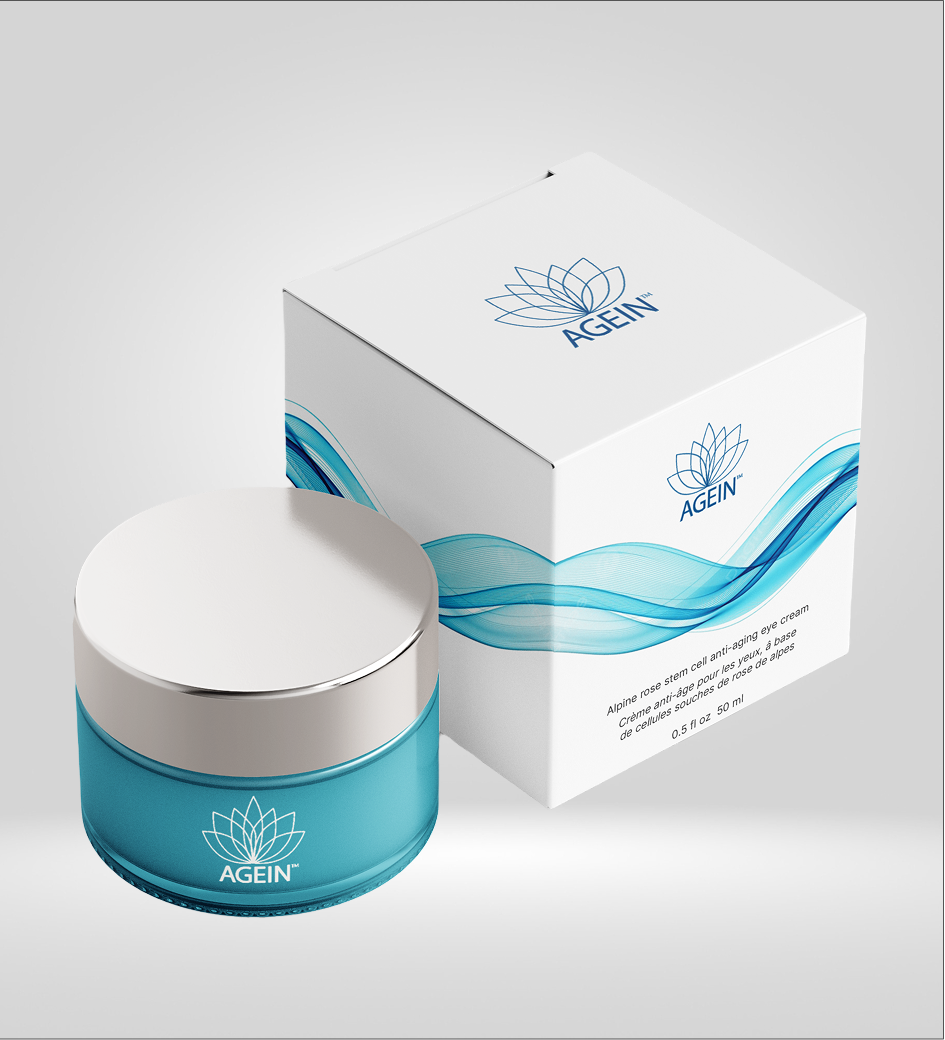
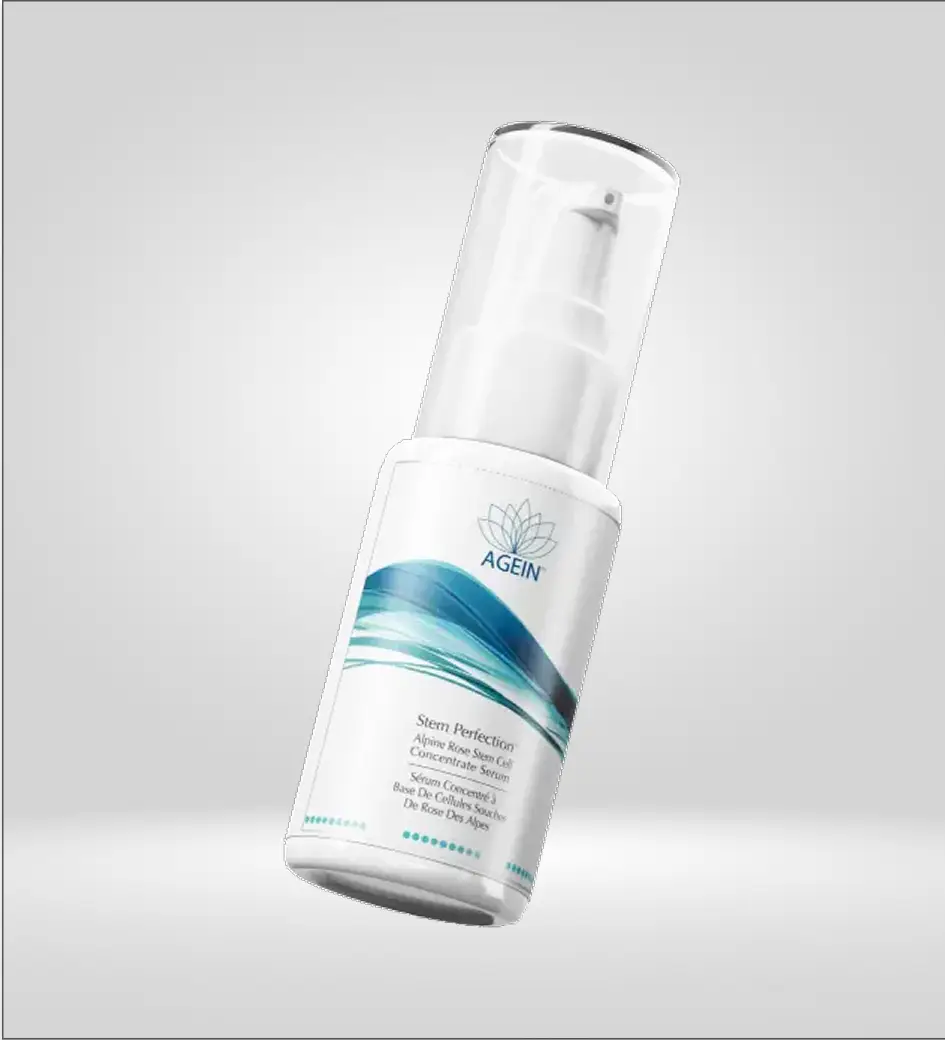
Research showed seniors responded more positively to familiar, hydration-focused visuals than cosmetic trends. A softer palette of teals and blues, paired with organic wave motifs, repositioned Agein for direct-to-consumer while strengthening trust across packaging, mail, and digital.

Readability wasn’t treated as an aesthetic preference — it was a performance requirement. Larger type, clear hierarchy, high contrast, and matte-coated stock improved comfort, reduced glare, and made information easier to understand for older adults.

Every touchpoint reinforced the same experience. Packaging, catalogues, landing pages, direct mail, and phone ordering shared a consistent visual language, helping customers recognize and trust the brand regardless of where they entered the journey.

Creative decisions were validated through continuous A/B testing across mail, catalogues, email, landing pages, and digital advertising. High-performing campaigns were refined rather than replaced, while lower-performing concepts were retired before they weakened brand recognition.
Technical Execution
I collaborated with purchasing teams, Asian manufacturing partners, and Canadian print vendors to produce production-ready artwork, dielines, regulatory labels, and prepress files. Detailed specifications, colour targets, and press approvals ensured consistency across international manufacturing and large-scale print production while supporting seamless integration with digital campaigns.
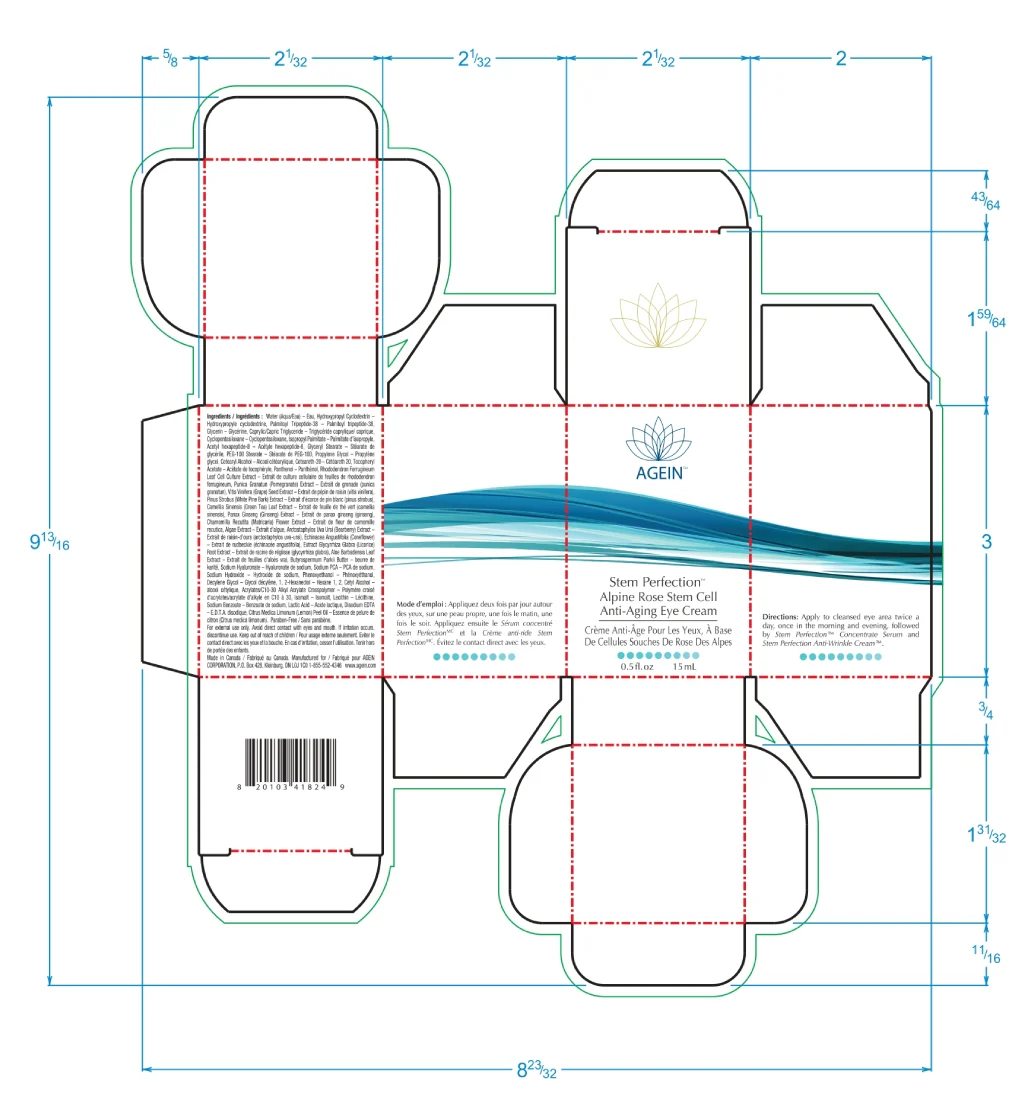
Detailed specifications and documentation ensured consistency and quality across international manufacturing and domestic print production.
PACKAGING

DIGITAL
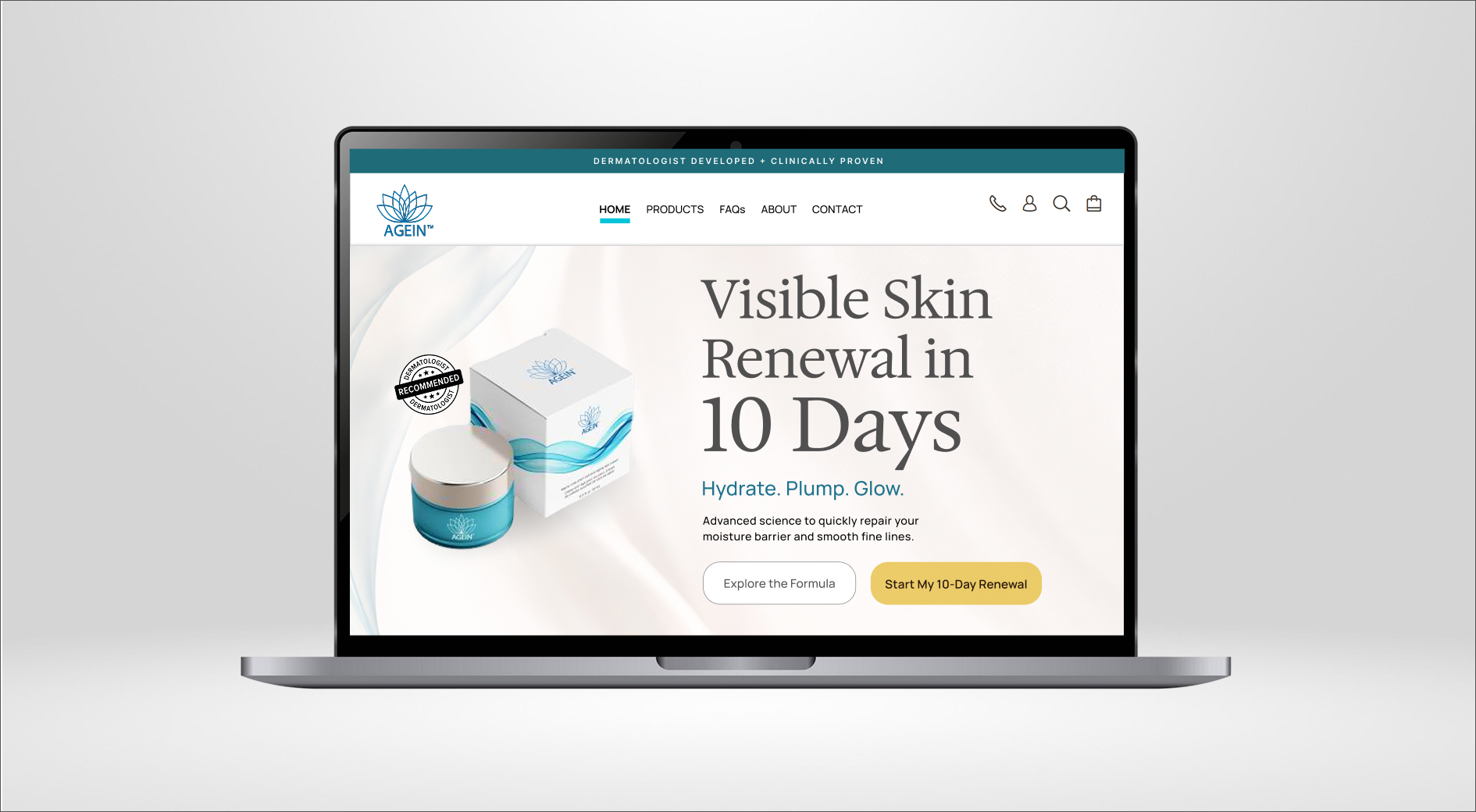
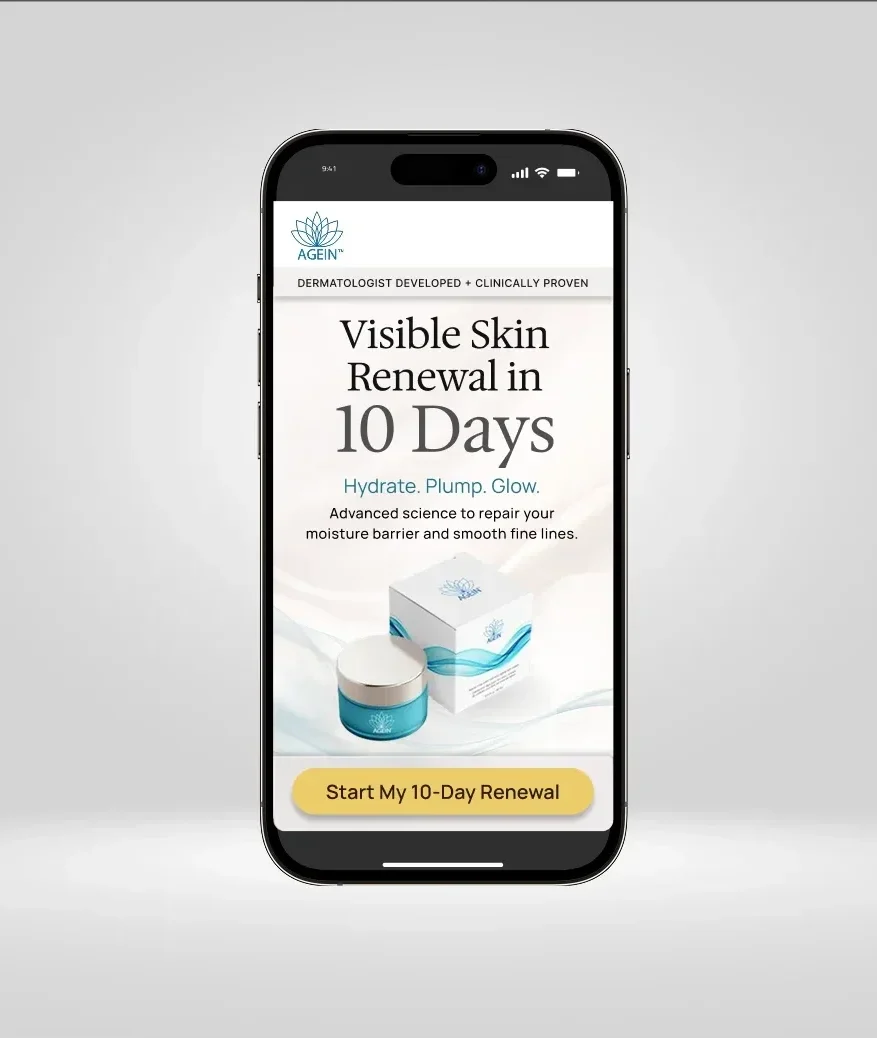
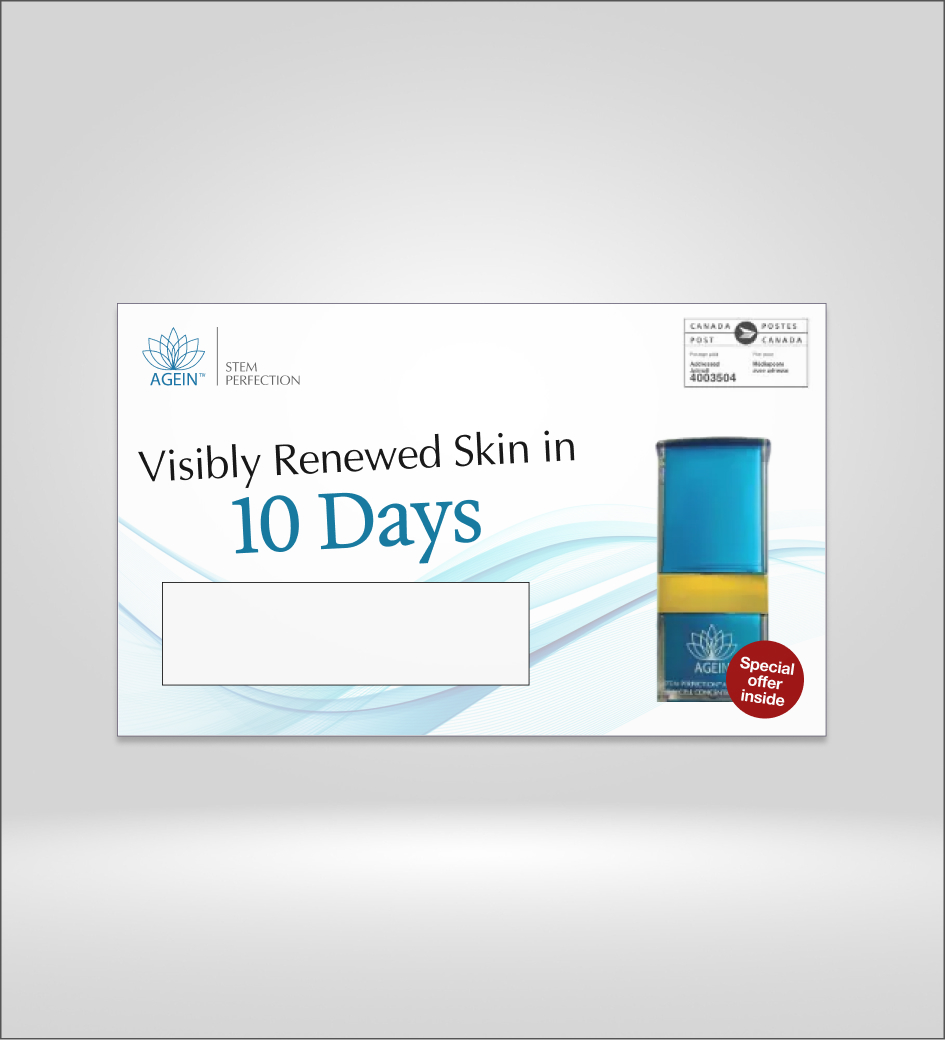


Design variations were tested across print and digital channels with performance data guiding refinement and protecting brand equity.
Outcome and Impact
The redesign supported sustained direct-to-consumer growth across Canada and the U.S. The product line expanded from a single moisturizer into a multi-product system supported by a consistent visual identity. Monthly campaigns of 25,000–30,000 pieces were continuously refined through testing, improving performance while maintaining brand recognition.
1-2% industry average
campaigns
What I Learned
Working on Agein reinforced how differently a brand must behave when it moves from retail to direct-to-consumer. In retail, packaging can rely on shelf presence and proximity. In DTC, the design has to carry the full weight of trust on its own through print and screens. This project also reinforced that successful direct-to-consumer brands are built as much on trust as aesthetics.
Accessibility, consistency, and continuous testing proved to be measurable business drivers, not simply design considerations. It also demonstrated the value of designing complete systems that perform consistently across print, digital, packaging, and customer support touchpoints.
Let’s Build Something
That Matters
If you’re building thoughtful systems, digital or physical, I’d love to hear from you.