
Building a Scalable
Brand System
From a single olive label to national retail distribution — building a scalable brand system designed for growth.
My Role
Brand Designer
Scope
Brand identity, packaging system, visual guidelines, production-ready assets
Tools
Adobe Creative Suite
Timeline
Multi-year engagement
TL;DR — A single olive label request revealed a brand that wasn’t built for retail scale. What followed was a multi-year engagement creating a complete identity system, from logo and packaging to vehicle signage — that supported growth into Loblaws, Sobeys, Longo’s, and other major Canadian retailers.
The Opportunity
There was no formal brief, just a request for a single olive label. But as soon as I started working, it became obvious that the label wasn’t the real problem.
Frangiulia was entering retail without an identity system designed for expansion. Packaging lacked consistency, hierarchy, and the regulatory structure required for multiple SKUs. The challenge was not creating one successful label, it was building a foundation that could support everything that came next.
Constraints and Scope
- Retail shelf visibility and legibility across multiple product categories
- Health Canada food labeling requirements and UPC integration
- Scalability across multiple SKUs and formats
- Budget-conscious production decisions
- Tight timelines — new products launched incrementally
- Consistency required across all future touchpoints
Research and Discovery
Before opening Illustrator, I needed to understand where this product would actually live. I studied grocery aisles, competitor packaging, shelf hierarchy, colour strategies, and regulatory requirements to understand how Mediterranean food brands competed for attention.
The goal wasn’t inspiration. It was identifying the constraints the brand had to succeed within: crowded shelves, harsh lighting, limited space, and strict packaging requirements.
Strategy
The strategy started by defining the brand foundation. The logo became the visual anchor for everything that followed: typography, colour direction, hierarchy, and the balance between Italian heritage and retail clarity.
From there the approach was simple: build a brand foundation, not a one-off label. Every decision had to work across current and future formats without requiring a redesign each time. The brand needed to feel rooted in heritage, but read cleanly at a distance, survive harsh lighting, and meet retailer expectations.
Design Approach
The brand evolved alongside the business, expanding into a packaging system, and eventually into a full retail-ready operation. Each phase built on the last.
Phase 1: Establishing the Brand Foundation
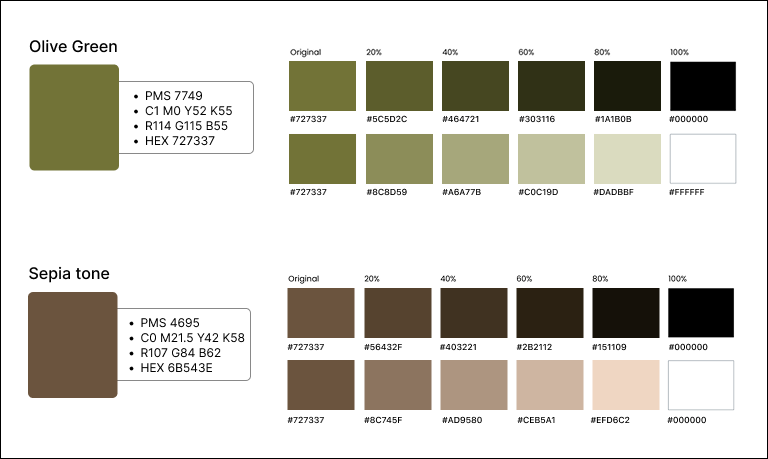
The logo established the foundation: a visual language balancing Italian heritage with modern retail clarity. Muted olive greens, warm neutrals, and refined typography became the foundation for packaging, stationery, and fleet applications.
Colour Palette
Typography
Plantin Pro Bold

- Used for: Wordmark/
brand name - Characteristics:
A classic serif evoking Old World Italian craftsmanship.
Optima

- Used for: Body copy and product descriptions
- Characteristics:
Humanist, elegant, and consistently legible at small sizes.
Phase 2: Turning identity into a system
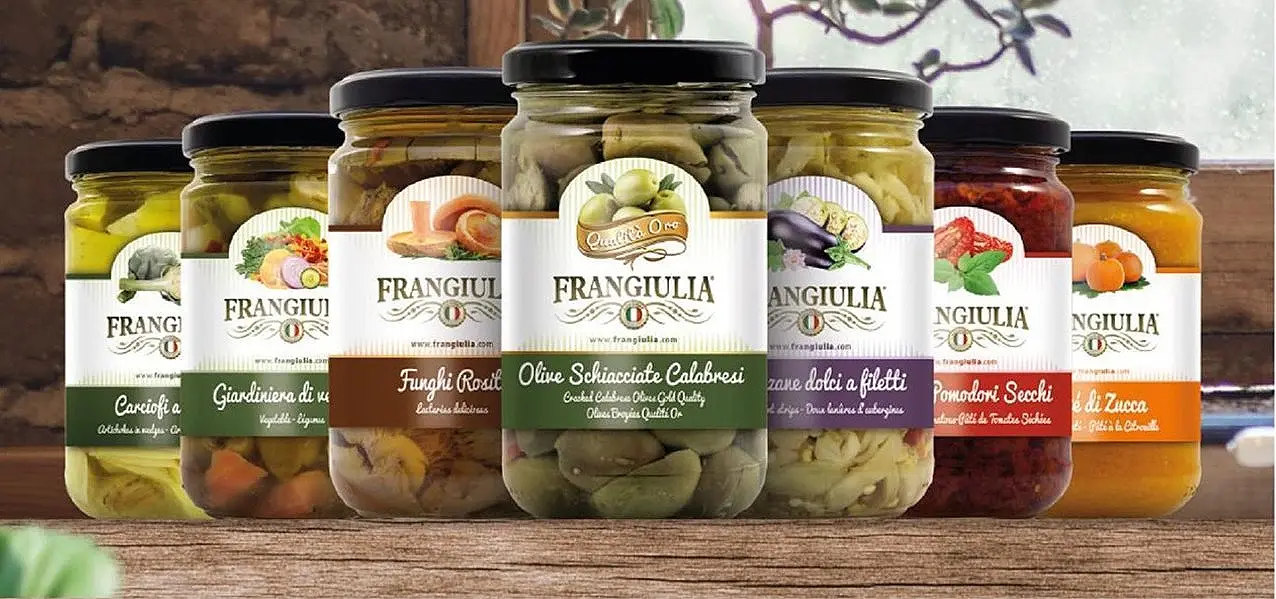
As the product line expanded, the identity had to become a system. I refined the visual language into a modular framework supporting multiple SKUs and formats without reinventing the design each time. Labels, cartons, and supporting artwork were built on a shared structure — consistent where recognition mattered, flexible where product categories required adaptation.
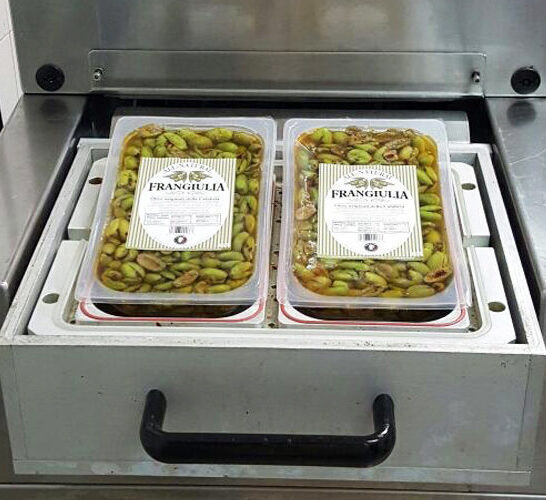
Phase 3: Preparing for retail scale
The identity system was designed to perform beyond the shelf, from packaging and vehicles to retail displays, logistics, and media.
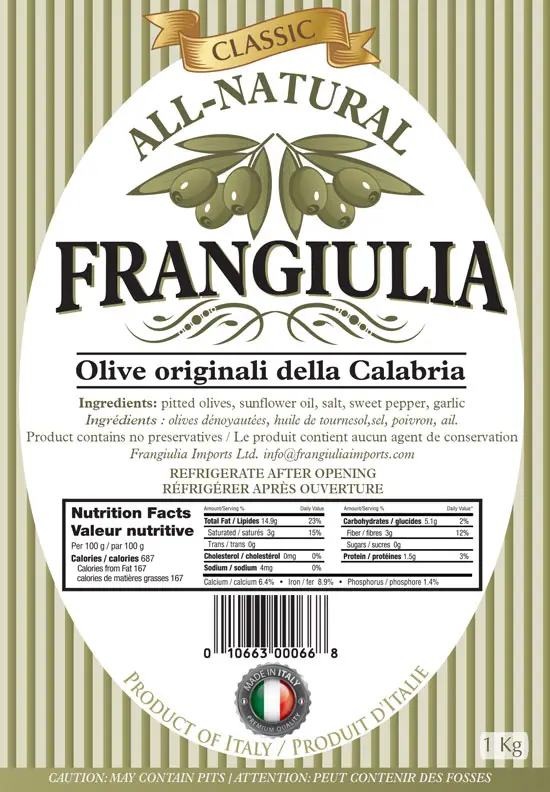
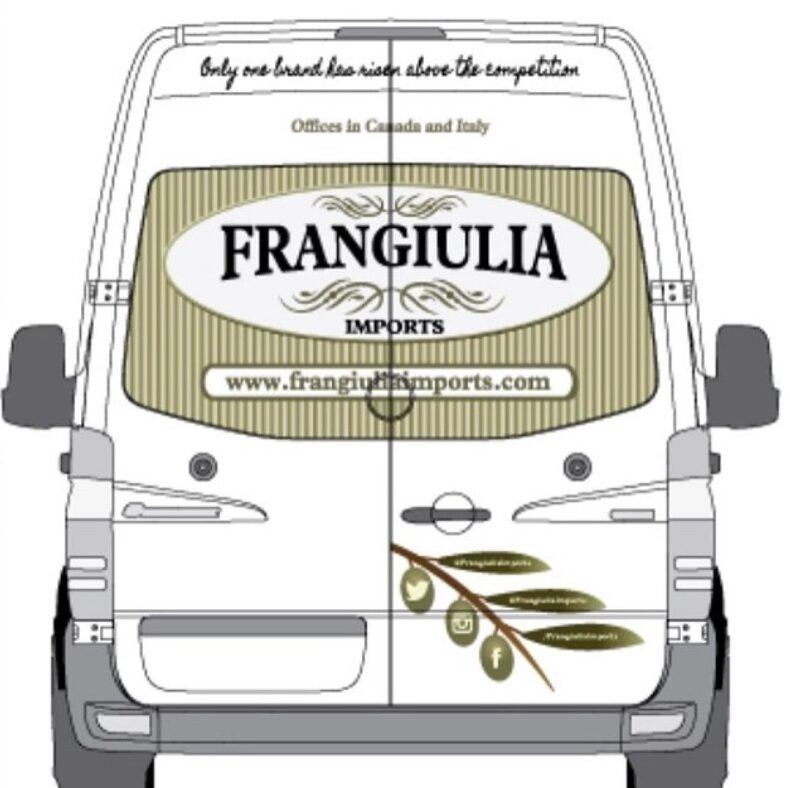
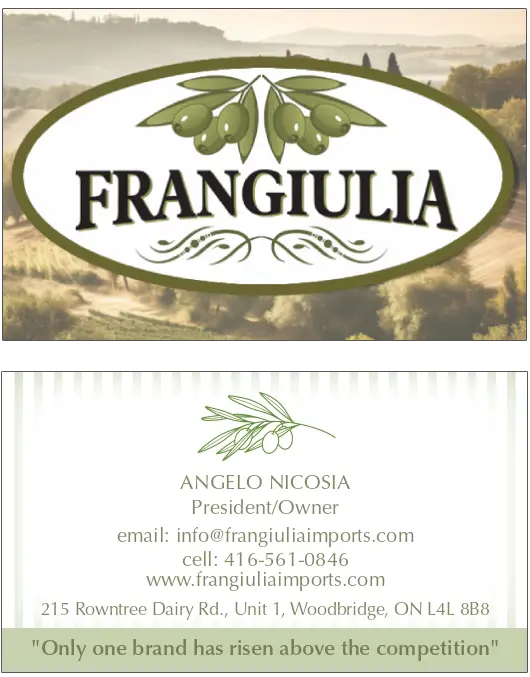
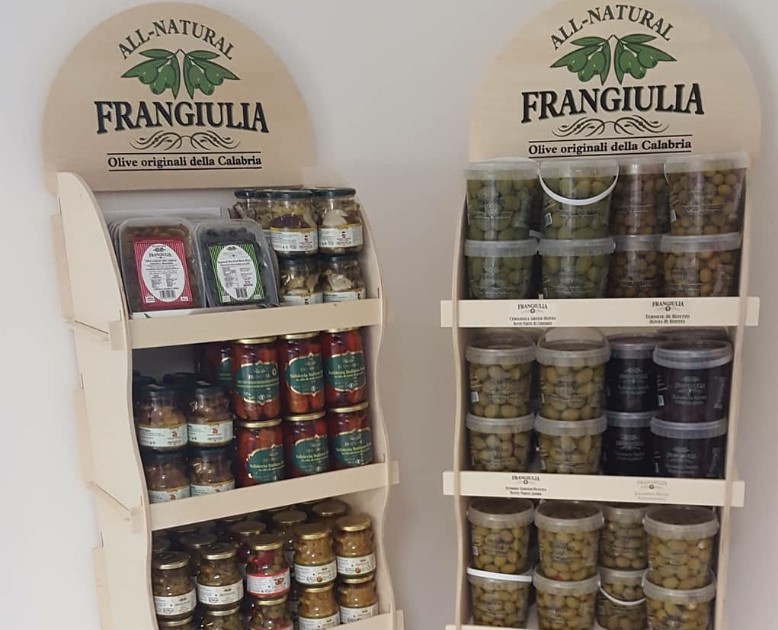
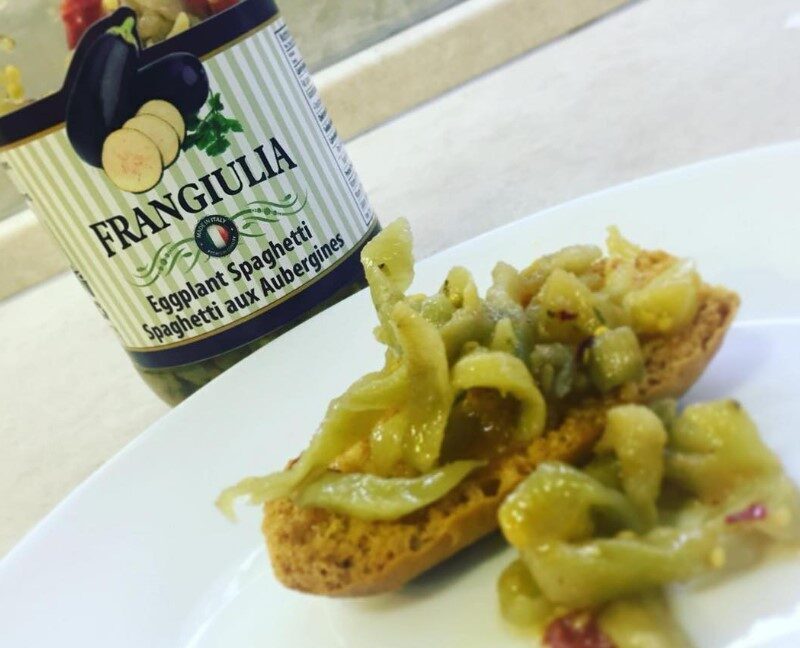
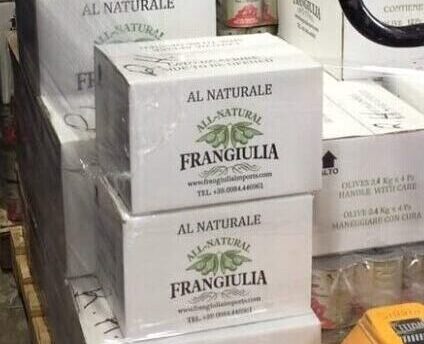
Beyond the Label: The Frangiulia identity extended into consumer-facing media, with branded packaging appearing in commercial content as the company expanded its retail presence.
Outcome and Impact
What began as a single olive label became a complete retail brand system spanning packaging, signage, fleet vehicles, and customer-facing materials.
The scalable framework supported expansion into multiple SKUs and retail environments without requiring a redesign.
Frangiulia products now appear in major grocery chains, such as:
Longo’s · Fortino’s · Loblaws · Sobeys · Pusateri’s · Foodland
Impact:
- Grew from a single SKU to a full multi-product retail line
- Achieved placement in several major Canadian grocery chains
- Built a system that scaled across multi-year growth without a redesign
What I Learned
Frangiulia reinforced that successful brand design is not just about creating a strong first impression; it’s about building a system that can survive growth. Early decisions around typography, colour, structure, and production constraints created flexibility for future products while maintaining consistency across every touchpoint.
The project also strengthened my belief that the best brand systems balance creativity with operational reality. A successful identity must not only look right… it must work in factories, warehouses, retail environments, and customer hands.
Let’s Build Something
That Matters
If you’re building thoughtful systems, digital or physical, I’d love to hear from you.